The Saint Nicholas Center for Faith and Justice (SNCFJ) at Virginia Theological Seminary (VTS) helps form Christian leaders as authentic and impactful advocates for justice. I arrived at Virginia Theological Seminary in 2025, already ordained as an Itinerant Deacon in the African Methodist Episcopal Church (AME). I was excited about the opportunity to earn a Master of Divinity, and I desired to expand my ecumenical lens.
The SNCFJ appealed to me because I believe that Jeremiah 29:7 exhorts us to pray for the peace of the city in which we dwell. I knew that I would reside in Alexandria, Virginia, for the next three years. This portion of my assignment was clear: pray for my new community and advocate for its welfare. My well-being is connected to the well-being of Alexandria and the State of Virginia because I am part of this community. I am proud to be a SNCFJ Fellow because I am being trained in advocacy work, which empowers me to offer practical assistance to my current community and future communities after I graduate. The SNCFJ provides an intentional space for community engagement and continued formation for the glory of God.
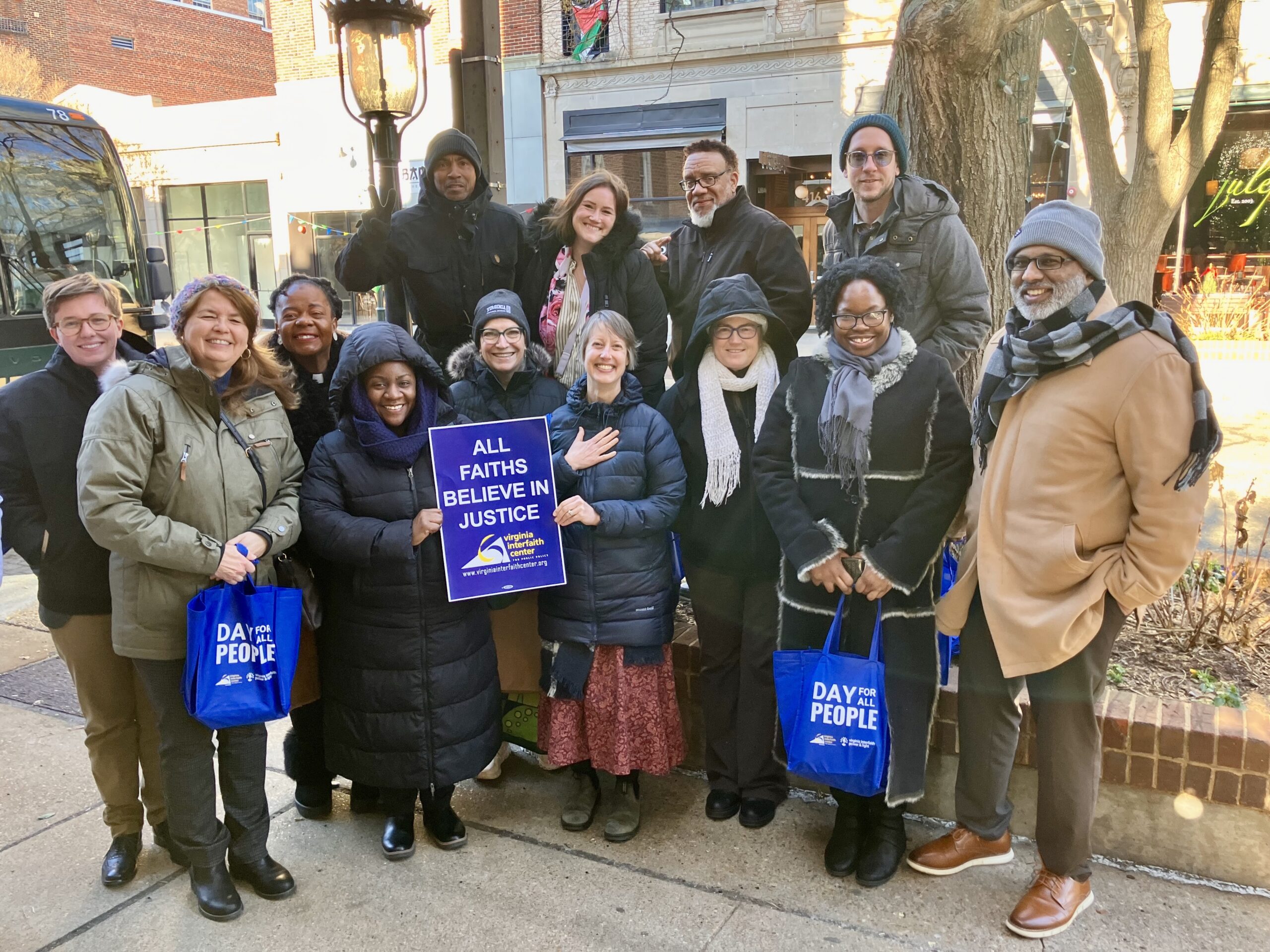
One of the first SNCFJ activities I participated in was the Justice Praxis Seminar, a weeklong immersive theory-and-practice course that worked in collaboration with community partners like Virginians Organized for Interfaith Community Engagement (VOICE) and Virginia Interfaith Center for Public Policy (VICPP). This life-changing experience introduced the work of policy craft, organizing, and advocacy. I and a group of seminarians from VTS and GTS stayed at Richmond Hill, an ecumenical Christian fellowship and residential community that offers retreats in a historic monastery, and practiced skills like relational meetings, power analysis, and coalition building. In addition to attending meetings with elected officials in Richmond, we analyzed policy work daily, focusing on the theological traditions of the Church as well as moral and political theory.
I have continued working with VOICE, participating in meetings with Alexandria Mayor Alyia Gaskins, Vice Mayor Sarah Bagley, Councilpersons, and various department heads regarding affordable housing in Alexandria. Currently, I am also working with VOICE and educators in Fairfax County. These experiences will also empower my post-graduation work as I imagine what it could look like for Houses of Faith to reach beyond their walls and venture into the public square. This practical experience is invaluable because the SNCFJ prioritizes the tools of empowering witness, forming for change, and partnering for collaboration.
As a SNCFJ Fellow, I have the opportunity to dialogue with transformative thinkers, visionaries, and social activists from various traditions. We meet in mosques, synagogues, parishes, temples, and sanctuaries. I have the opportunity to learn from religious, community, private sector, and grassroots leaders. I am empowered and encouraged to ask questions and be questioned. As a SNCFJ Fellow, I am continually placed in spaces that nourish the formation of thoughtful, open, and engaging communication. These spaces challenge me to deeper levels of professional and personal development in preparation for the work that I will engage in after graduation from VTS.
Being a SNCFJ Fellow has enabled me to participate in and assist in the planning of numerous activities. The skills and knowledge that I am gaining from these experiences serve to enhance my formation as a spiritual leader today and in the future. I attended the North Carolina Environmental Justice Network Summit 2025 along with other VTS students as a result of a SNCFJ mini-grant. The Summit gave access to a multicultural, multi-generational cadre of activists united in the fight for environmental justice. This was an expansion of my definition of justice. Whether racial, economic, disability, or housing justice, my role as a SNCFJ Fellow is giving me space to work with those doing the work that affects God’s people, and this is Holy Work.
A weekend Silent Retreat at Shrine Mont in the beautiful Shenandoah Valley introduced me to a new level of restorative silence and greater appreciation for multicultural spiritual fellowship. I continue to use techniques learned during that Retreat. I have assisted in the planning and execution of book launches, sculpture dedications, on-campus activities for seminarians, and major events open to the public. As a Fellow, the SNCFJ is providing me with formation beyond the classroom as I imagine what it could look like for Houses of Faith to reach beyond their walls and venture into the public square.