In many ways, theological education in the US has changed little since it began in the early 1800s. The preparation of Episcopal Church leaders follows a well-worn path like the western-leading groves of a wagon train trail. The structure, format, and patterns, however, have dramatically changed in recent years. Like 19th-century cattle towns, new ways of training and forming religious leaders have rapidly emerged this century, creating a Wild-West culture.[1]
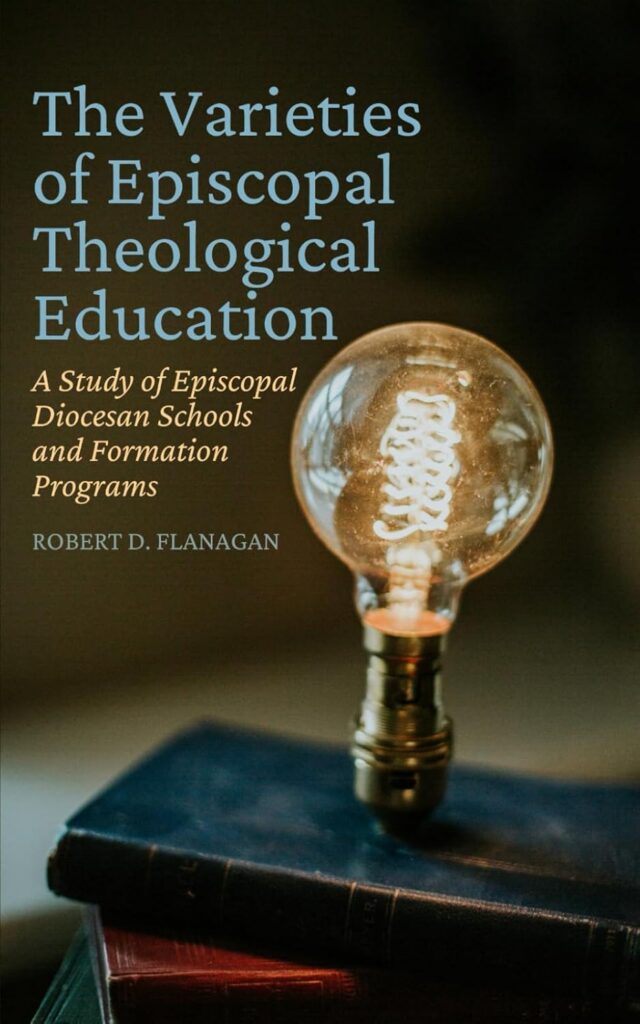
In The Varieties of Episcopal Theological Education, I report on The Study of Episcopal Diocesan Schools and Formation Programs. The findings determine an educational landscape that reaches far beyond the remaining seven historic seminaries. Many universities and divinity schools have established Episcopal training programs or houses, and most diocese have developed their own local diaconal and priestly training programs, some partnering with other dioceses.
The numbers show a clear change is afoot. The study’s researchers found more than 40 local diocesan schools and formation programs. An additional 34 dioceses participate in the Iona Collaborative. Eighty-one dioceses participate in various deacon schools. These numbers are in constant flux, and changes often occur when a new bishop takes over a diocese. The schools offer numerous programs and instruct many students. For instance, in the survey’s Phase II, 33 respondents noted that 15 of their schools or programs have lay programs, 20 have diaconal programs, 18 have priest programs, and 12 have continuing education courses. The student totals for the four types were 140 Lay, 100 Deacons, 65 Priests, and 85 Continuing Education. These schools and programs currently educate approximately 615 students, offering vital instruction to Episcopalians.
The outcome of the breadth of programs is unclear. Three obvious points of tension arise. First, as noted by retired Bishop Kirk Smith,[2] the cohesion of the denomination is at risk. With so many separate institutions, education can become diluted; so does Episcopal identity and cohesion. Each program adds its own flavor and emphasis and with a thin standard curriculum, some vital topics may be omitted.
Second, the General Ordination Exams (GOEs) have become the arbiter for competency and cohesion and identity. Not all bishops require ordinands to complete the exams, but most do. Thus, the multiday five-section examination has emerged as the way to test students’ knowledge of vital topics to ministry in the denomination, and Episcopal identity and cohesion. However, the GOEs were not intended to measure the two additional areas.
Third, the new educational scheme often creates classes within the priesthood. A decreasing number of students attend residential and historic seminaries. A growing number of students attend hybrid seminaries and some attend online-only programs. Local training and formation programs are rapidly growing. The quality of education and training for ministry varies greatly between the students at residential programs and some hybrid seminaries and the online only and local programs. A locally formed priest’s resume may look dramatically different from a priest trained at a historic seminary.
Positive aspects exist in this educational Wild West as well. The typical local training program is robust and traditionally focused. These local programs center on education and training crucial to successful ministry. They focus on the needs of a region or diocesan ministry. Rural or small-town ministry contexts receive the appropriate attention because students remain in those areas.
Local schools also allow for a more diverse group of priests. The priesthood is not limited to those who can uproot their lives and livelihood for three years. The reasons for remaining home for training are complex. Some students have spouses unable to relocate because of careers or other family issues. For instance, residential seminaries seldom provide housing for families with more than three children. Seminarians with aging parents in need of their attention also cannot easily relocate. Special needs children need familiar settings, and older seminarians’ lives can be complex, preventing relocation. The Church needs priests with various backgrounds to meet the variety of congregational situations modern life presents.
Locally trained students often know each other better and can support each other more easily. Most priests remain in their diocese or region for their career. Being formed with a local group provides continuity and familiarity that supports future ministry. They can rely on each other through difficult times because they have had additional years of close collaboration while studying.
The Wild West of formation and training has created a new landscape. The challenges are significant and need addressing by bishops and General Convention. Opportunities for new growth also have emerged. The question is whether The Episcopal Church wants to be intentional about new avenues of training or keep a wide-open scheme that grows like untended western prairies.
__________________
[1] The term Wild West was first shared with me by an Episcopal bishop.
[2] See Bishop Kirk Smith’s July 2023 Covenant article, “A Bishop Goes to Seminary.”
You can purchase a copy of The Varieties of Episcopal Theological Education here.