Faith in Action: Learning to Advocate for Justice
Student Jasina Wise shares how being a Saint Nicholas Center for Faith and Justice Fellow is enriching her formation.

Together we make The Episcopal Church stronger
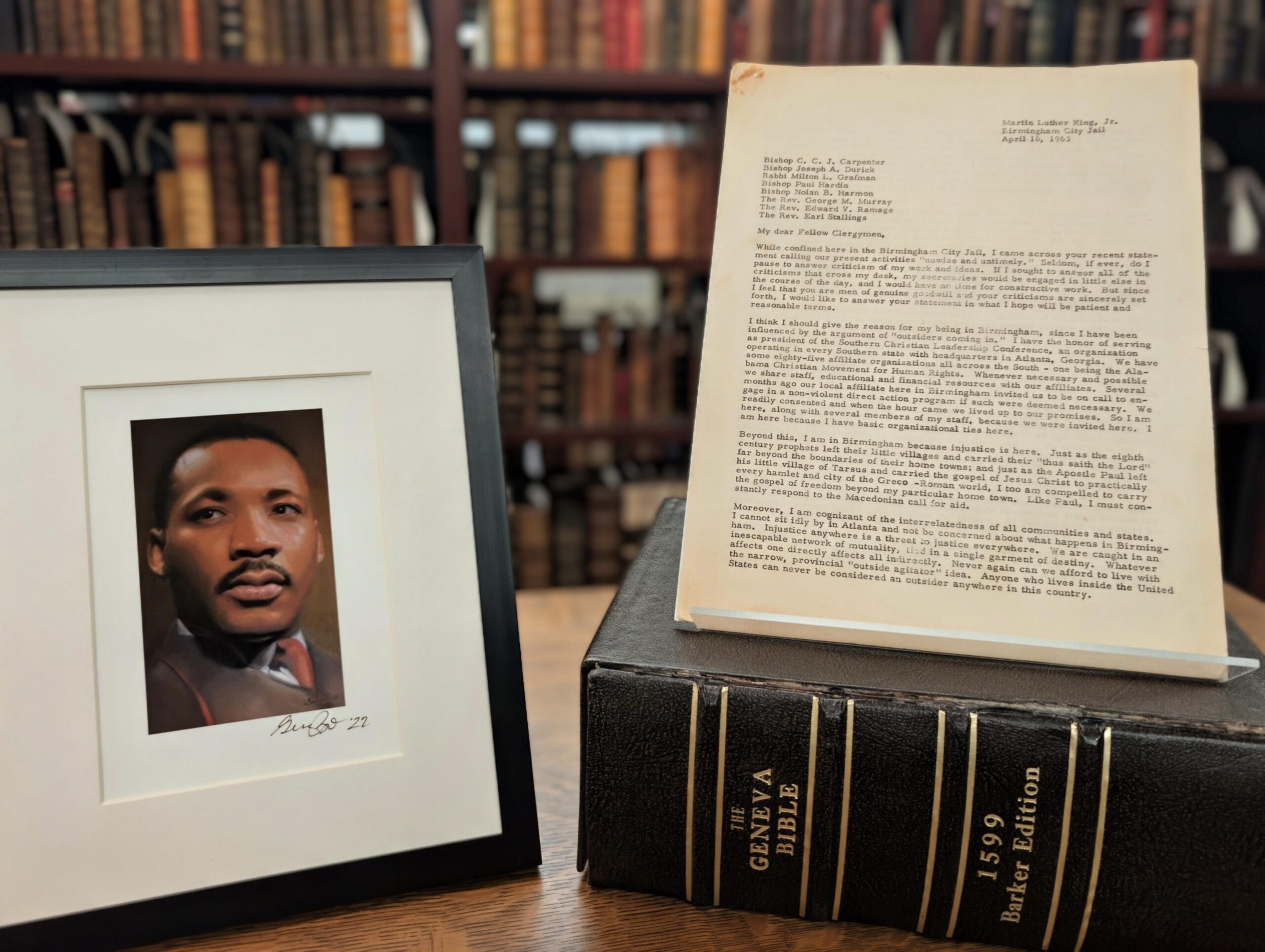
In March 2026, the African American Episcopal Historical Collection (AAEHC), a joint initiative between Virginia Theological Seminary and the Historical Society of the Episcopal Church, discovered an early draft of the Rev. Dr. Martin Luther King Jr.’s historic Letter from Birmingham Jail, in the papers of the late Bishop John M. and Esther Burgess. AAEHC Curator Riley Temple tells the story.
Last semester, as Nick Gentry, then a student intern from the University of Maryland, processed the donated papers of the Rt. Rev. John Burgess,[1] he happened upon a document that has since altered the African American Episcopal Collection’s (AAEHC) life and prominence significantly. It was an early typewritten draft of the Rev. Dr. Martin Luther King, Jr.’s iconic 1963 Letter from Birmingham Jail.[2]
Gentry, in a moment of astonishing alertness, knew right away that this obviously aged, yellowed, brown-edged document, customarily tucked into a polyurethane sleeve, had great significance. In the upper right corner of the first page, just after the date in April 1963, was typed “Birmingham, Alabama,” the city in which the letter was written. Moreover, it was addressed to eight men, each name preceded by an ecclesiastical title. To King scholars, the presence of these entries identified the document immediately.
Gentry handed the document to Archivist Denton Waits, who in turn walked it over to AAEHC Curator Riley Temple. The palpable excitement led to an equally exciting series of steps that were immediately taken to authenticate the letter’s provenance. Waits called New York’s Swann Galleries, an auction house that had recently sold a similar document, the language of which differed from that in the AAEHC letter in ways that tended to affirm that the letters came from the same source.
At the suggestion of former Morehouse College scholar and writer Dr. Fred Smith, Temple called the Hon. Andrew Young, a veteran of the Civil Rights Movement, a King “lieutenant,” former Atlanta mayor, former member of the U.S. House of Representatives, and former U.S. ambassador to the United Nations. A gracious 94-year-old Andrew Young answered his phone while in his physician’s office, and shared poignant memories tinged with the regret that often accompanies looking back and second-guessing missed opportunities. Young’s comments fortified the rapidly developing conclusion that what the AAEHC possessed was authentic. It had been prepared and typed as an early draft of King’s letter.
Staff also analyzed the AAEHC’s version of the letter against copies held by other repositories, as well as the final text printed by the New York Post. Most of the text comparisons were done by Kayla Floyd, Assistant Archivist, who identified a number of differences in structure and quotations, providing further evidence that the AAEHC document was an earlier draft of the final letter. One example is that the final version of the letter included a quotation from John Bunyan, which does not appear in the copy held by the AAEHC.
News of the find was picked up by a number of media outlets, including Episcopal News Service, The Historiographer, The Living Church, WTTG -TV – the local Fox News affiliate – and local radio station WTOP. The publicity led to the AAEHC being contacted on behalf of Ms. Willie Pearl Mackey, the person who had actually typed each of the early drafts of the 1963 letter, requesting a visit.
Ms. Willie Pearl (as she prefers to be addressed) confirmed that the letter she examined in the AAEHC was one of the original drafts that she typed in 1963.
She also shared stories about the tense environment in Birmingham that led Dr. King to write the letter and shared details of how the letter was written and prepared for publication in the New York Post. While behind bars, Dr. King had no paper to write on. The scraps of paper, in various forms, that he used were smuggled into him by his lawyer, Clarence B. Jones. King wrote on the scraps of paper Jones provided, and around the margins of smuggled newspapers. Ms. Willie Pearl spoke of the challenges of deciphering King’s notes on used “greasy sandwich bags, and even on toilet paper.” She also described how she and the head of the Southern Christian Leadership Conference, the Rev. Wyatt Tee Walker, worked for three days and nights piecing together the notes scribbled on the paper scraps to create the different drafts of the letter. Those marathon efforts eventually became the eloquent and stunning text of the 1963 letter.
1963 was a big year in America’s Civil Rights revolution. George Wallace had just been elected to his first term as Governor of Alabama in the fall 1962 election. He made a pledge in his January 1963 inaugural address in Montgomery: “segregation now, segregation tomorrow, segregation forever.”[3] America would discover that he spoke for millions of white people who were determined to resist the growing drumbeat for dismantling Jim Crow, the convenient nickname for America’s legally enforced racial apartheid. It would not be his only “line in the sand” that year to keep Alabama’s racial segregation alive and entrenched. By spring he would capture the headlines all over the world when he literally stood in the doorway of the University of Alabama to block the registration and enrollment of two young Black students, James Hood and Vivian Malone.[4]
Beginning in April 1963, Dr. Martin Luther King Jr and the Southern Christian Leadership Conference (SCLC) began their “Birmingham Campaign.” It was a series of marches and demonstrations designed to pressure Birmingham to desegregate its public facilities. King refused to obey a court order to “cease and desist” from further demonstrations, and he was sent to jail. The 1963 letter was written during this incarceration.
Within a few weeks, on June 12, 1963, the Mississippi Field Secretary of the National Association for the Advancement of Colored People, Medgar Evers, was murdered at his home in Jackson by a member of the White Citizens’ Council.
Then, on August 28, 1963, more than 250,000 people gathered on the National Mall for the March on Washington to demonstrate for jobs and freedom. On the steps of the Lincoln Memorial, Dr. King addressed the people with his iconic speech, “I Have a Dream.” After the march ended, Dr. King and the march leaders, who were all the heads of the major Civil Rights organizations, met with President John F. Kennedy in the Oval Office. There the President informed them of his intent to draft and submit to the Congress civil rights legislation to desegregate public facilities. It was a big win.
Only two weeks later, on Sunday morning, September 15, 1963, the Ku Klux Klan bombed Birmingham’s 16th Street Baptist Church, killing four little girls and severely injuring another. This was considered to be the turning point for what had been lukewarm congressional support for President Kennedy’s promised civil rights legislation.
Then, on November 22, 1963, President John F. Kennedy flew to Dallas, Texas, where he was shot and killed. While many world assumptions were shattered about the peace, safety and stability of the U.S., even before Air Force One departed Dallas for Washington, Vice President Lyndon Baines Johnson was reassuringly sworn in as the 36th President of the United States. President Johnson would later sign into law the Civil Rights Act of 1964 (public accommodations) and the next year, the Voting Rights Act of 1965. 1963 had been a very big year.
The Birmingham demonstrations continued while King sat in his Birmingham jail cell. Birmingham was tense and unsettled. Eight “moderate” white clergy, in an effort to calm the civic turbulence, decided to take a stand and wrote a letter to King that was made public. Among the writing clergy were two VTS graduates: the Rt. Rev. C.C.J. Carpenter, Episcopal Bishop of Alabama, who graduated in 1926; and the Rt. Rev. George Murray, Episcopal Bishop Coadjutor of Alabama, who graduated in 1956.[5] Although the language of the clergy letter did not actually oppose racial integration, it made an urgent plea to King and the activists to slow down. They were moving too fast. The clergy writers did not, by any means, write that integration was inevitable in time, but used language that was just short of that. Their “ecclesiastical” advice was that the tactic of demonstrations was both “unwise and untimely.” They sought “order.”
King was moved to respond publicly to the widely disseminated letter from the white clergy. His response would become the document that, with power and incandescent clarity, demonstrated that this southern Black Baptist preacher was no mere rabble-rousing, headline-seeking politician. The letter eloquently and brilliantly demonstrated that his commitment to social justice was not simply informed by his theology but was driven by and deeply rooted in his faith and belief in the teachings of Jesus Christ and in his patriotism – his love for his country. He wrote:
One day the South will know that when these disinherited children of God sat down at lunch counters they were in reality standing up for the best in the American dream and the most sacred values in our Judeo-Christian heritage, and thusly, carrying our whole nation back to those great wells of democracy which were dug deep by the Founding Fathers in the formation of the Constitution and the Declaration of Independence…
I… hope that circumstances will soon make it possible to meet each of you, not as an integrationist or a civil rights leader, but as a fellow clergyman and a Christian brother. Let us hope that the dark clouds of racial prejudice will soon pass away and the deep fog of misunderstanding will be lifted from our fear-drenched communities and in some not too distant tomorrow the radiant stars of love and brotherhood will shine over our great nation…
The letter also expressed his carefully worded disappointment that a group of clergy failed to acknowledge the fundamental belief in the dignity of every human being, and that they thought it persuasive that by admonishing King that his demonstrations were “unwise and untimely” they could dictate to people who had been oppressed for almost 350 years the right time to seek their freedom. When “wait” means “never.” He mildly rebuked them that they favored order over justice.
For many Americans who have living memories of the Civil Rights Movement and Dr. King, the Letter has served as the fundamental statement of purpose and belief, the guiding star that oppression and all other forms of injustice in America had to be dismantled. Its articulation of principles of equality and its theological soundness have insured the continued life of his teachings and that his beliefs and lessons are eternal.
_______________________
[1] The Rt. Rev. John Burgess of Massachusetts, who died in 2003, was the first Black suffragan bishop in the Episcopal Church. He directed that upon his death his papers would be preserved in perpetuity at the African American Episcopal Historical Collection (AAEHC) in the VTS Archives. His descendants transferred the papers some years later.
[2] Bishop Burgess was a staunch advocate of Civil Rights for African Americans, but exactly how and why Bishop Burgess had the letter among his papers remains a mystery.
[3] Inaugural Address of the Hon. George Wallace, Gov. of Alabama, January 14, 1963, Montgomery.
[4] Vivian Malone’s (now deceased) youngest sister was Sharon Malone, a retired Harvard-educated obstetrician/gynecologist who is the author of the best-selling, Grown Woman Talk: Your Essential Companion for Healthy Living (Random House, New York, 2025). With the intervention of US Attorney General Robert Kennedy, Vivian Malone and James Hood were admitted. Hood transferred to and graduated from the University of Michigan and Malone received her bachelor’s degree from the University of Georgia in 1967.
[5] Bishop Carpenter was thought to be a segregationist. Bishop Murray was said to be more accommodating of the urgent push to desegregate.
Student Jasina Wise shares how being a Saint Nicholas Center for Faith and Justice Fellow is enriching her formation.
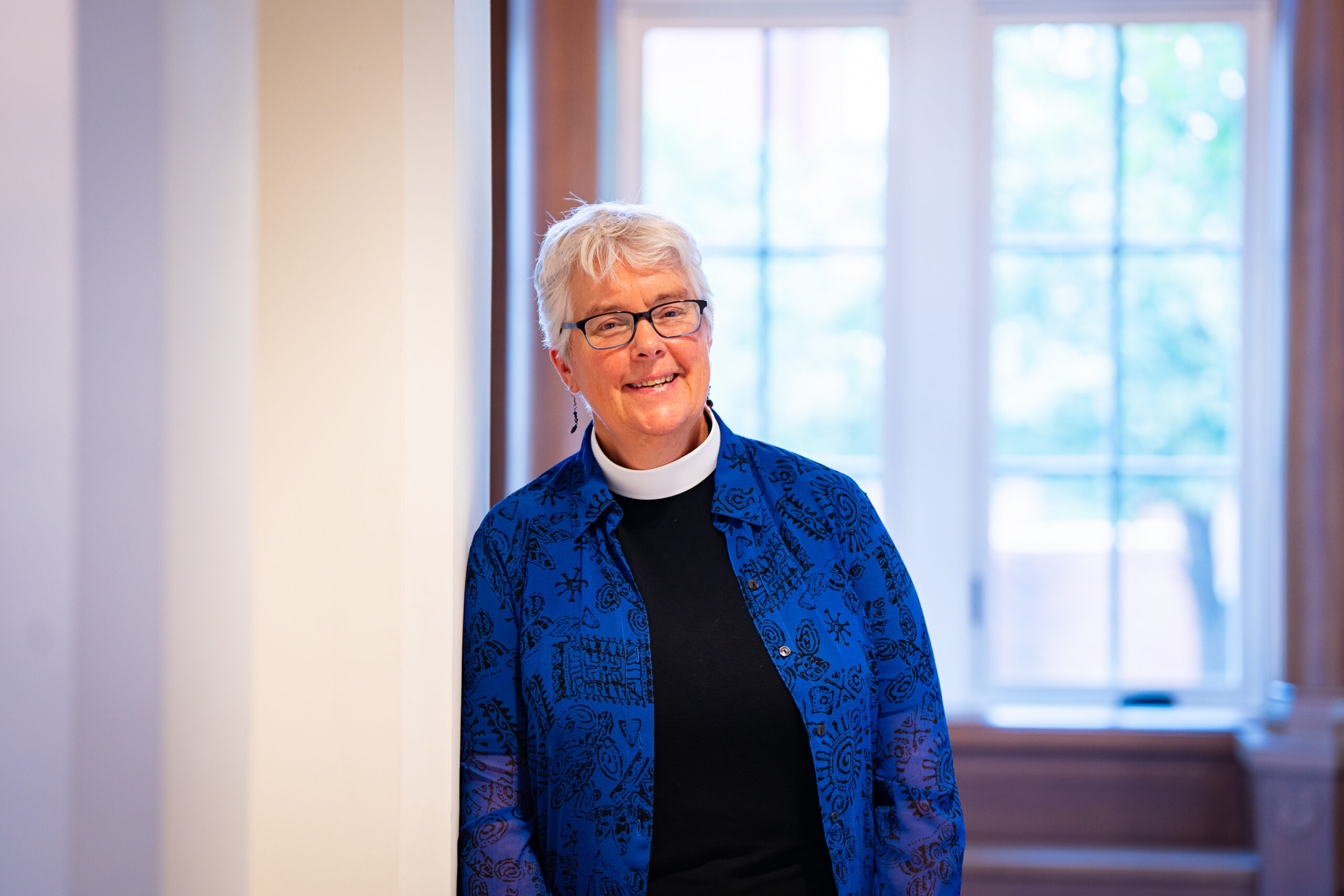
Virginia Theological Seminary (VTS) congratulates the Rev. Ruthanna Hooke, Ph.D., on her appointment as the 10th Dean and President of Seminary of the Southwest.
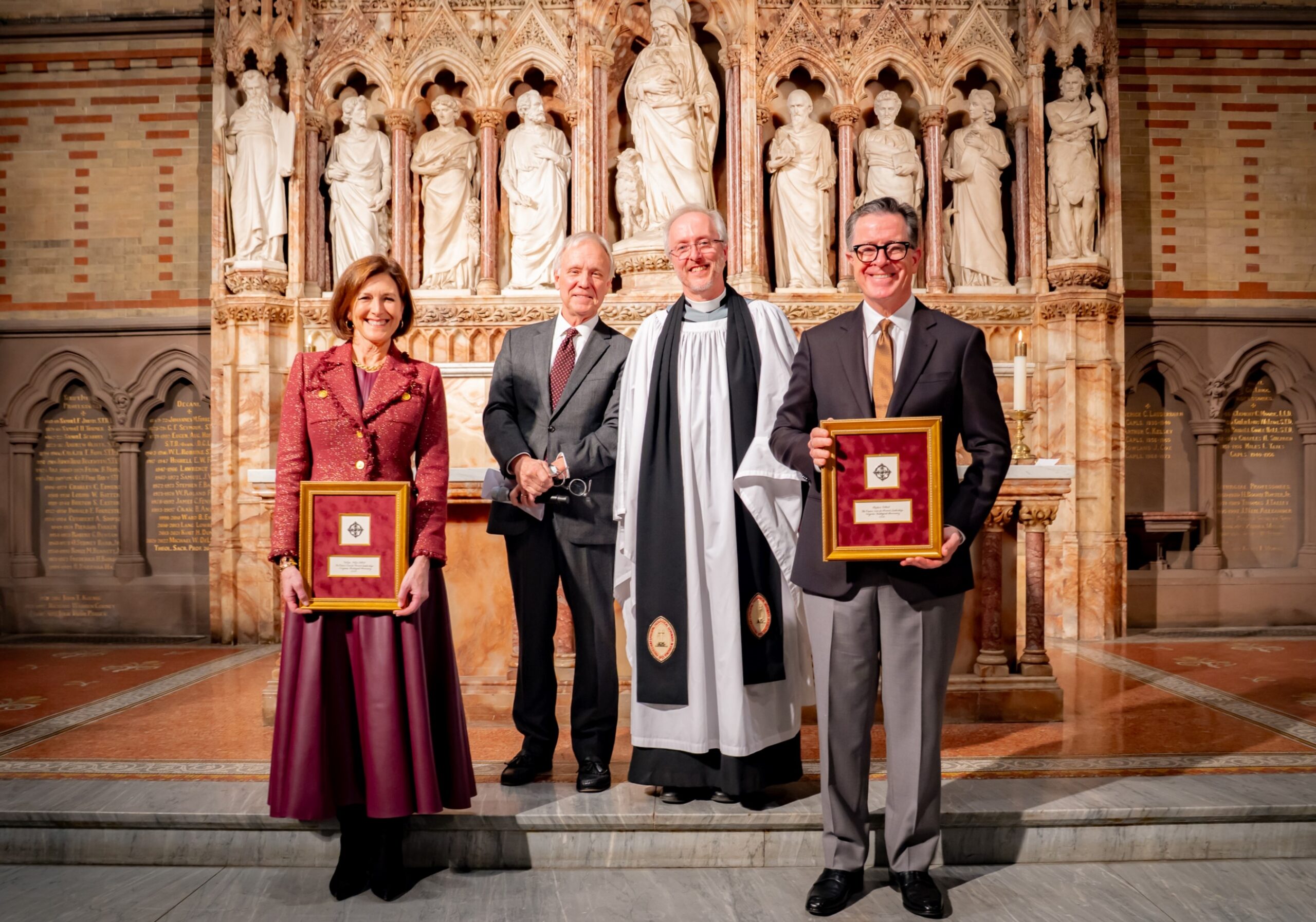
Virginia Theological Seminary (VTS) has conferred the Dean’s Cross for Servant Leadership on Stephen Colbert for his work as a satirist who provokes critical thinking and inspires change, and on Evelyn McGee-Colbert for her ministry and leadership in the arts.
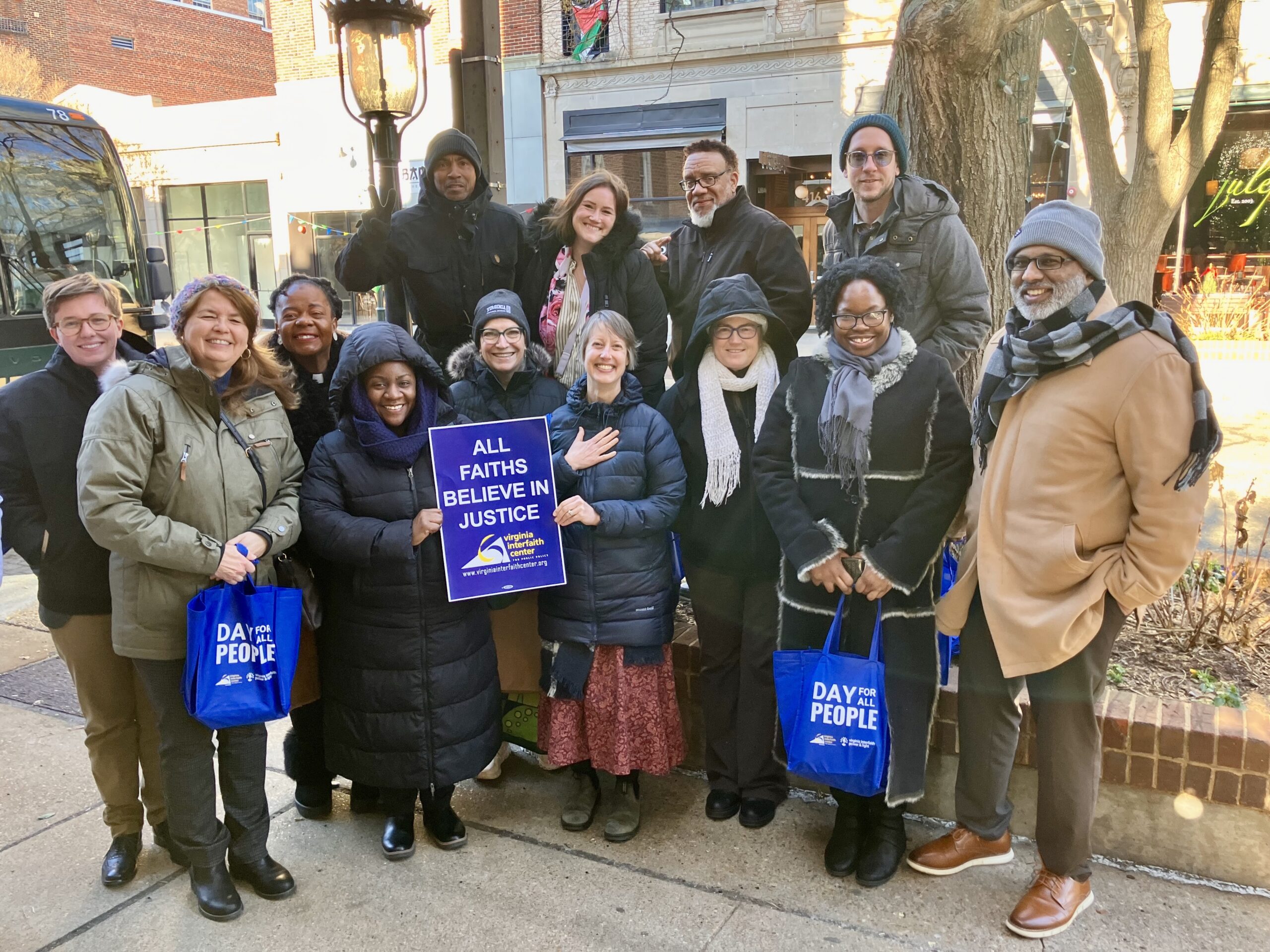
VTS has launched a Faith and Justice Concentration in its Master of Divinity degree. The new offering enables students to pursue a pathway that focuses on formation for transformative engagement in the public square.