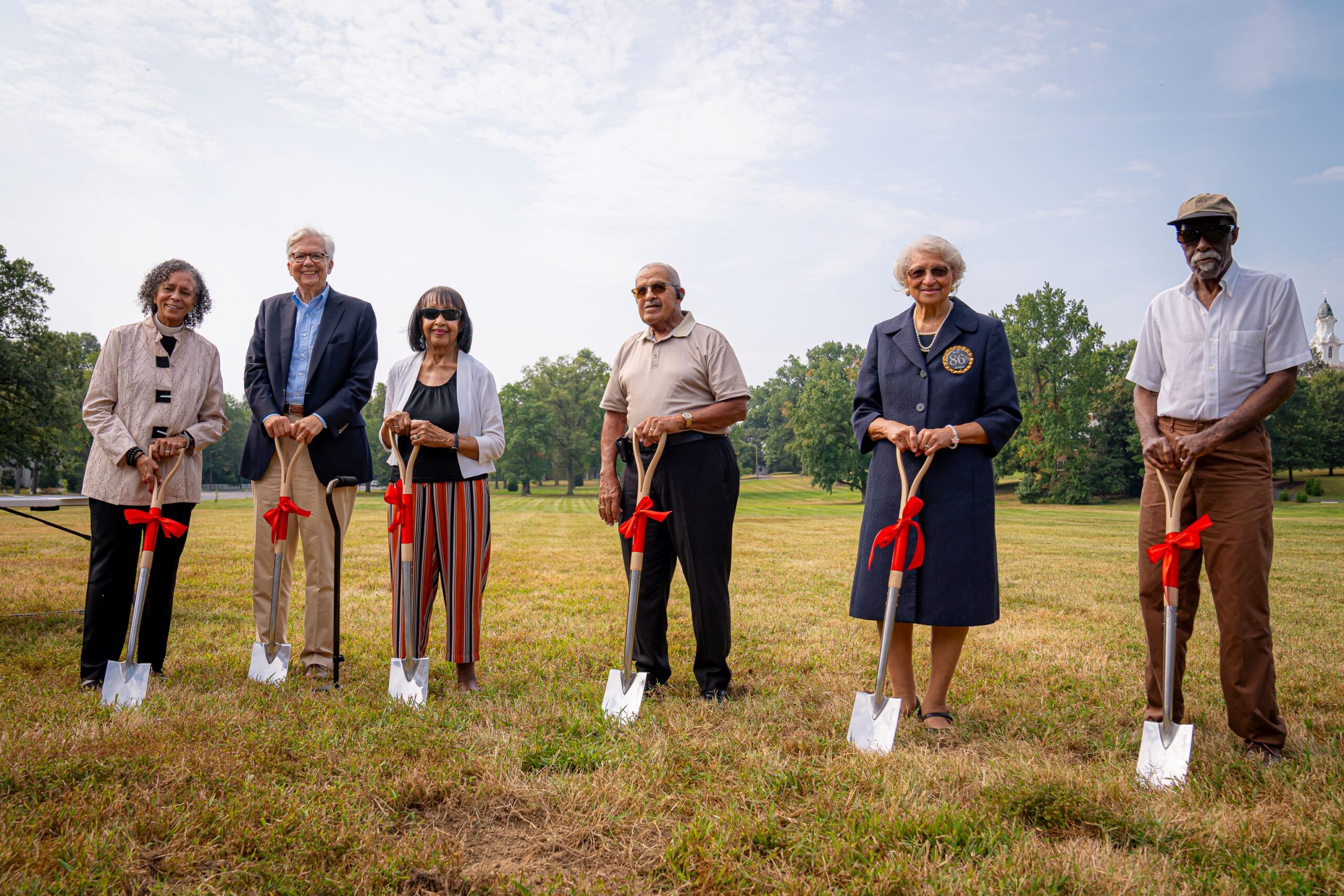
Construction has begun on a reparations memorial at Virginia Theological Seminary (VTS) to honor African Americans who labored at the Seminary between 1823 and 1951.
The start of construction on the memorial was one of a number of milestones the Seminary’s Reparations Program marked this year, including two scholarship recipients earning degrees, and having descendants help to guide seminarians’ engagement with local history as part of their Intercultural Competency training.
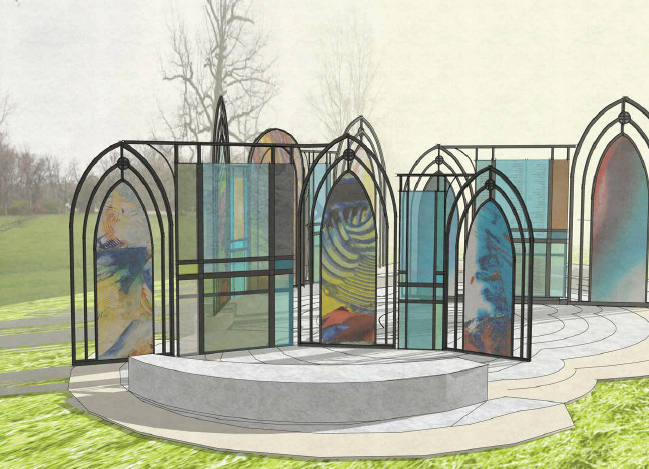
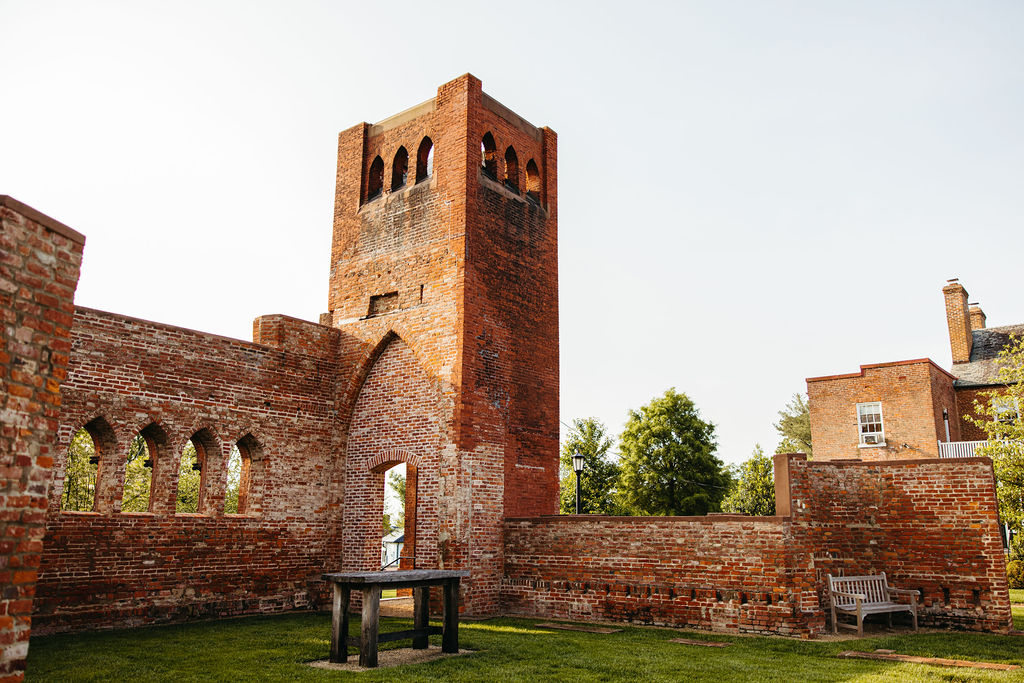
The memorial, which was created by mother-and-daughter team Martha Jackson-Jarvis and Njena Surae Jarvis from Jackson-Jarvis Studio, features a series of stained-glass windows set in ironwork. The design draws inspiration from features of the Seminary’s campus, such as historic windows, arches, ironwork and trees. All known laborers, both named and unnamed, will be etched into the glass windows, with space left for additional names uncovered by future research.
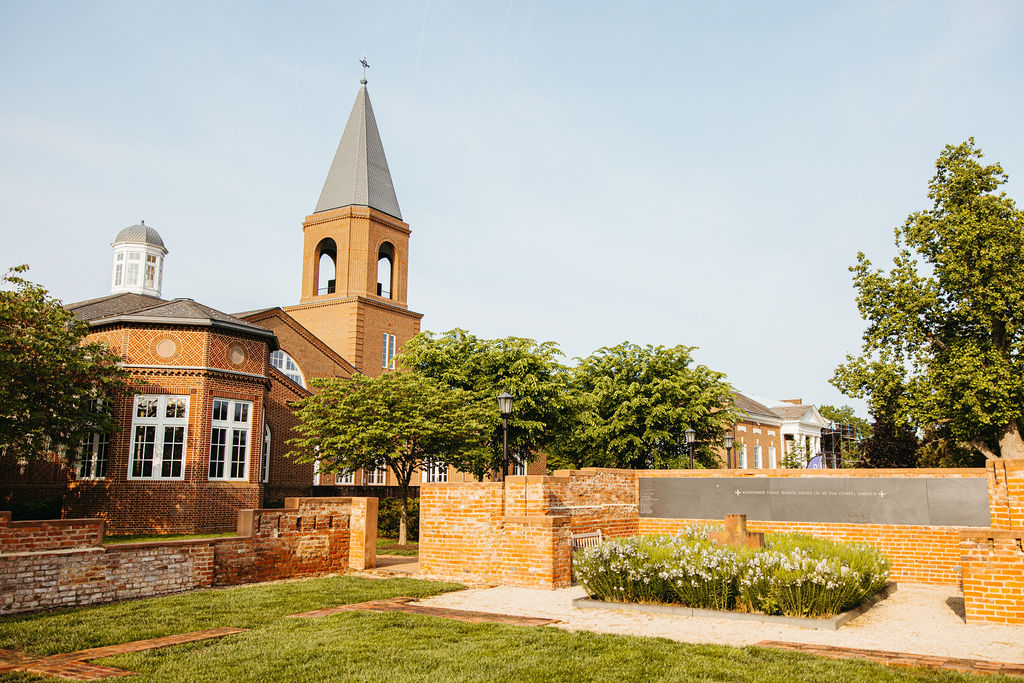
The memorial will be located in a prominent position on campus close to Quaker Lane, a busy thoroughfare, to ensure it is visible and accessible to the local Alexandria community.
VTS created the reparations program in 2019 as part of the Seminary’s commitment to recognizing its participation in oppression in the past and working towards healing and justice in the future. The program offers annual cash payments to the descendants of Black people, both enslaved and free, who labored at the seminary during slavery and Jim Crow, in recognition of the fact that they were either not compensated or were not compensated fairly for their labor.
Historical and genealogical research remains the foundation of this work, helping us identify laborers and connect with their descendants. To date, the program has documented 606 Black people who labored at VTS, with 372 identified by name and another 234 whose names have not yet been uncovered. The Seminary’s lead researcher, Maddy McCoy, is working to recover as many of those names as possible so the program can connect with their descendants.
Alongside the ongoing research, the program remains committed to moral and material repair, building meaningful relationships with descendants, and recognizing the Black people whose labor helped shape the Seminary.
In May, Elwood Jones became the first member of the descendant community to graduate from VTS when he earned his Master of Arts degree. As part of the Reparations Program, the Seminary offers scholarships to descendants to study at VTS.
In September, Toniette Duncan, the first descendant to receive the Reparations Scholarship named in honor of her grandparents, Willie Mae Carter and Wilmer Henry, graduated from Southern New Hampshire University with a bachelor’s degree. Both achievements reflect an important milestone in the program’s support of descendants’ educational pursuits.
Another first occurred during the Seminary’s annual Intercultural Competency training in August term. This year’s training included a place-based learning trip to Fort Ward Park and Museum. Descendants Anthony Adams, Brenda Adams, Mary Jones, and Alfonzo Terrell facilitated tours exploring the history of “The Fort,” a community founded by formerly enslaved people shortly after the Civil War.
Many descendants in the Reparations Program trace their ancestry to the founding families of The Fort community, who were also instrumental in establishing Oakland Baptist Church and St. Cyprian’s Chapel. Attended by the junior class, faculty, and staff, the trip offered a direct and tangible opportunity to engage with the history of VTS and the communities that have played pivotal roles in its continued success.
Beyond campus, the program continues to contribute to national and international conversations about reparations. This fall, I presented at two academic conferences: the Transatlantic Reasonings Conference, which brings together academics and practitioners from the United Kingdom, Jamaica, and the United States, representing history, theology, ethnomusicology, and English; and the Universities Studying Slavery Conference at the University of Maryland.
At the latter, I presented and moderated a panel with two descendants, Dr. Michael D. Casey and the Rev. Linda J. Thomas. This was our first joint conference presentation with descendants and fulfilled their wish to take a more visible role in representing the program and sharing their families’ rich histories.
The work of reparations asks us not only to acknowledge the Seminary’s history, but also to consider how that history shapes our responsibilities to one another today. As the program continues to grow, relationships with descendants remain at its center. Their participation helps shape what repair looks like at VTS and how we carry this commitment forward together.