At every season in human history, Christians have been called upon to take a stand. For the early church, the issue was the Roman Empire. This was a season when Christians were, periodically subject to persecution and their witness literally cost them their lives. For Augustine of Hippo, the challenge was the decline of the Roman Empire and, with it, the inevitable turbulence and breakdown of society.
With the emergence of the so-called “Dark Ages,” we had an alternative way of taking a stand. It was Benedict of Nursia who built communities of prayer, work, and hospitality that preserved learning and faith through the subsequent centuries of disorder. Francis of Assisi, in the 13th century, took his stand against the wealth and comfort of a church that had grown rich. He was a reminder that Christians are obligated to stand alongside the poor.
The Reformation was another difficult season. William Tyndale, in England, translated the Bible into the language of the ordinary people, and paid for that witness with his life. Thomas Cranmer, the great architect of the Book of Common Prayer, was burned in Oxford as the religious politics of England changed.
As we cross the Atlantic into the Americas, we find Bartolomé de las Casas, who started life as a colonist and a slaveholder, becoming a Dominican friar and spending 50 or so years defending the humanity of indigenous peoples against Empire.
In the 18th and 19th centuries, taking a stand involved confronting the evil trade of enslaved people. We marvel appropriately at William Wilberforce and Thomas Clarkson, and perhaps the best-known, the formerly enslaved Christian, Olaudah Equiano. They all argued that the Gospel was incompatible with the slave trade, that one cannot affirm the Gospel and support the trade of enslaved people.
In the 20th century, we have seen the confessing church in Germany issuing the Barmen Declaration in 1934, which rejected the claim of the Nazi state to lordship over the Church and insisted that Jesus Christ is the one Word of God whom we must obey. Dietrich Bonhoeffer died in April 1945 for his willingness to take a stand as he opposed Hitler.
Here in the United States, in 1963, writing from a Birmingham jail, the Rev. Dr. Martin Luther King Jr. explained to white clergy that one must be willing to take a stand for justice, and that justice cannot be constantly delayed. In Uganda, Archbishop Janani Lewum had the temerity to confront President Idi Amin and paid for his courage with his life in 1977. In El Salvador, Archbishop Oscar Romero was shot at the altar in 1980 because he called on soldiers to stop killing their own people. In South Africa, Archbishop Desmond Tutu took a stand against apartheid, insisting that a theology which divides people by race was not a Christian theology.
One challenge for Christians is to discern the signs of the times. Many of these historic moments are clear and uncomplicated. There is no question about the need to take a stand against the genocide of Jewish people, the denial of fundamental civil rights to African Americans, and the slaughter by the military of the state against its own people.
But there are complications in our moment. The language of “taking a stand” is being used for diametrically opposed political positions. Persons who are pro-life feel they must take a stand against abortion, while those committed to the pro-choice position also feel that they must take a stand in favor of a woman’s right to decide.
There are other issues where the stand needs to be more nuanced, for example, the relationship of government policy priorities in terms of expenditure. These are issues on which Christians can and will take different positions. It is not intrinsically un-Christian to believe in encouraging business enterprise and having a safety net that the nation can afford. Conversely, it is not un-Christian to believe in a strong infrastructure of state-run services that provide an appropriate basic framework in terms of a living wage and healthcare. Sometimes taking a stand involves celebrating pluralism of viewpoint, encouraging conversation, and inviting people to see the political opponent as a person who has a significant contribution to make to the conversation in the public square.
Let us stand back for a moment and think through where exactly Christians should stand in this highly complex moment. First, we are obligated to always stand as a witness to the Gospel of our Lord Jesus Christ. In our secular age, where skepticism about faith is widespread, it is a fundamental obligation for all Christians to witness to the simple claim that this universe is intended; it is a creation of God who desires a relationship with all people.
We are obligated to explain that the claim that materialism (the idea that we are all simply complicated bundles of atoms that emerge from nowhere and ultimately go nowhere) is mistaken. This philosophical materialism has deeply disturbing implications for morality, for the intrinsic dignity of all people, for the obligation to live life aware of a sense of accountability for our behavior, and even for the very concept and possibility of truth. On this, every Christian must take a stand.
Second, there are certain viewpoints with which Christians cannot compromise: racism that takes the form of an affirmation of white supremacy is abhorrent; antisemitism that affirms certain stereotypes about Jewish people is wrong; and the sexism that sees women as inferior is incompatible with the fundamental Gospel obligation to see all people as made in the image of God. When we encounter such viewpoints, we cannot keep silent. We need to express our viewpoint that these positions are deeply problematic to the God that we worship.
Third, Christians are committed to communities embracing a pluralism of viewpoints. Disagreement has always been part of the Christian witness. The Bible is a “dialogic” text, as the Rev. Dr. Judy Fentress-Williams often puts it. We have Chronicles in the Old Testament sitting alongside the Book of Kings, with very contrasting priorities in their reading of Jewish history. We have four Gospels – Matthew, Mark, Luke, John – which all capture different dimensions of the disclosure of God in Christ. We have disagreements closely tracked in different congregations in the New Testament. Paul in his letters seems to take slightly different positions on how best for Christians to relate to the Jewish law.
Pluralism has always been part of the Christian tradition. Augustine of Hippo was clearly shaped by both Hebraic and Neoplatonic thought. Thomas Aquinas was trained in the Augustinian tradition but brought that tradition into conversation with the rediscovery of Aristotle in the 13th century. In this combination of difference, Aquinas proved to be a deeply creative theologian. We should not be afraid of communities of faith that live with a pluralism of viewpoints. Part of our obligation in this season is that God calls us to take a stand as witnesses to the possibility of living with difference.
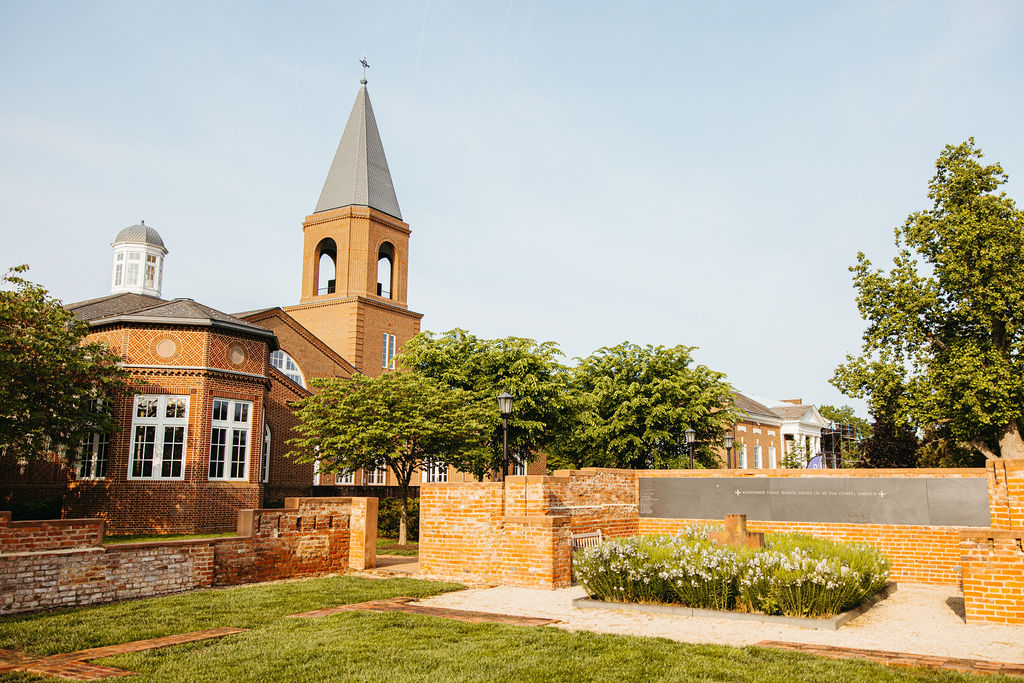
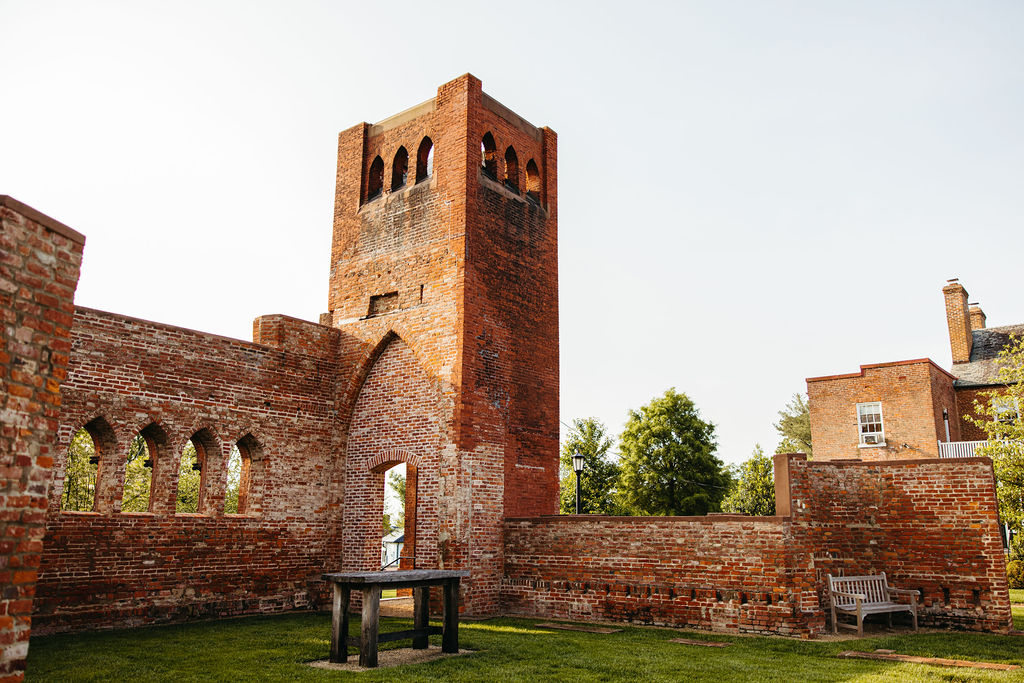
At Virginia Theological Seminary, we aspire to be a community that does take a stand. We will take a stand for the sake of the Gospel and the narrative that challenges all forms of reductionism – narratives that deny the intrinsic dignity and significance of all people. We aspire to take a stand for racial justice. We do so conscious of the sin of our past. We are determined to make amends, albeit in modest ways, but in ways that invite us in the present to create new possibilities in the future. We aspire to live with pluralism inside our community. There are many issues on which Christians can and should disagree with each other, and those disagreements can be illuminating. This is a difficult moment. History will look back on this season and provide its own analysis of what we got right and what we got wrong. Our task in this season is to be deeply serious, to pray fervently, to be in conversation with each other, and to discern appropriately. May God help us all do this work as well as we can.