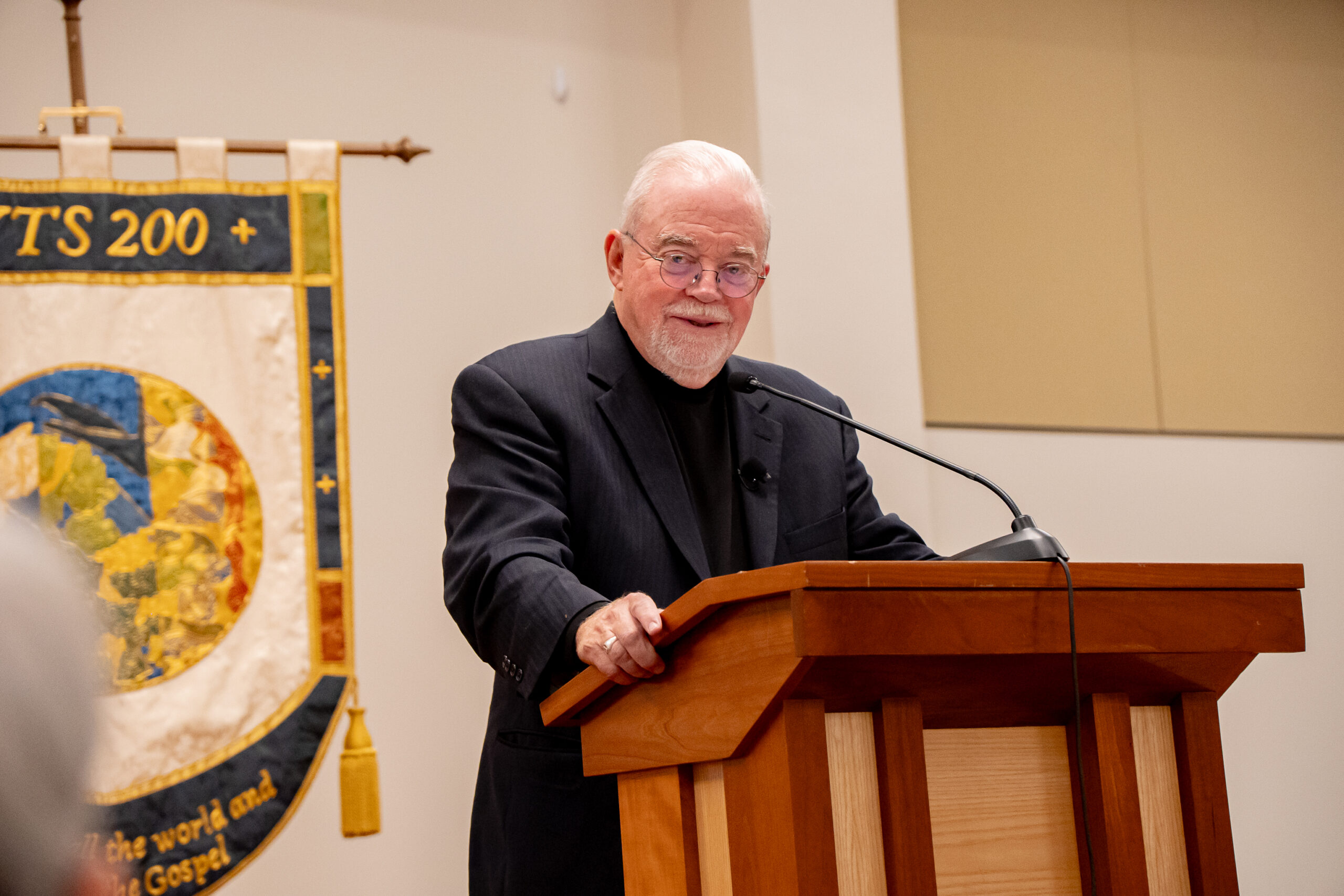
The Reverend Jim Wallis believes voter suppression is an assault on the image of God. Speaking at a lecture at Virginia Theological Seminary in September 2024, he said: “God says let us make humankind, all of us, in our image and after our likeness, in the first book of the Bible. This is the Divine foundation for all of our earthly talk about human rights, civil rights and voting rights. So, I came to understand, voter suppression, voter intimidation, voter threats of violence – all of that – is nothing less than an assault on imago Dei, the image of God.”
He pointed out that White Christian nationalism had taken the most welcoming, inviting, inclusive vision on the planet – the gospel – and made it white. “The name spells out the problem… You say Christian, but you don’t mean sacrifice and service, you mean control and domination. Domination theology goes all the way back … to Puritan preachers who said white Europeans owned this land, and therefore it was OK theologically to displace and nearly destroy an Indigenous people, and then take a whole African population captive and enslave them. We had theological justifications for all of that and it’s coming back with a vengeance,” he said.
In 2022, Wallis co-founded the organization Faith United to Save Democracy (FUSD) to recruit ministers to serve as poll watchers in 10 key states to help guard against voter intimidation. He explained: “It’s always in poor minority voting precincts. We’ll have a white guy walk in with a gun somehow, and all the Black voters have to walk past him to vote. Now, if some Democratic activist took him on, there’d be quite a fight. But when he’s surrounded by a bishop with robes and [people in] collars, [they’ll say], ‘Excuse me sir, we think you’re probably looking for the bathroom, let us help you find it.’”
FUSD ramped up its activities for the 2024 election. “Most of our leads are Black clergy in all these battleground states, but now we’ve been joined by rabbis, imams, people of other faith traditions, and some with no faith tradition but they like what we’re doing and want to be part of it,” he said. Speaking ahead of the 2024 election, Wallis warned that young people all over the country were watching to see how faith communities responded to politics. “They’re watching to see how faith communities stand up or don’t speak out, and they tell me this will determine whether they ever will ultimately show up at the door of a congregation. The test of democracy is a test of faith and a test for a new generation.”
Referencing John 8:32 “Know the truth and the truth will make you free,” Wallis said through reflecting on this verse, he had realized that Jesus was not just saying that the opposite of truth was lies, but that it was also captivity. “Truth and freedom are indivisible and a whole lot of our people out there, particularly white people, are captive, they’re stuck, they’re trapped.” He pointed out that instead of just saying they’re wrong and I’m right, or they’re bad and I’m good, we had to figure out how to set these captives free, and that pastors had an important role to play in this work as both bridge builders and truth tellers.
Wallis said another text that “just screamed” at him was Matthew 25. “Jesus says I was hungry – I was that mom who had two jobs and still needed food stamps, and they’re getting cut. I was thirsty – I was that Black mother in Flint who couldn’t get clean water without lead poisoning for her kids, when all the white moms in the suburbs had plenty of water. That was me.”
He said: “I was naked,” and told the story of a farmer in Guatemala confronting soldiers who threatened to rape his daughter unless he turned his son over to serve as a child soldier. “So, we took everything we could carry – that’s pretty naked – we walked thousands of miles to where we were told we’d be given asylum. Then they put us in cages, and our kids in different cages, and we never saw them again.”
“I was sick – and they just decided not to expand Medicaid in a bunch of states, taking away healthcare from a whole lot of low-income people, Black and white. Jesus says, ‘Yeah that was me too.’”
Moving on to the parable of the Good Samaritan, Wallis noted that Samaritans were scorned as false worshippers during the life of Jesus. “They were being ‘othered,’ like we see people othered all the time,” he said. But he pointed out that Jesus praised the Samaritan as the only person who stopped to help the wounded man on the highway. “I see that question being asked all over the country now: who is my neighbor? You have got campaigns that want to turn neighbors into enemies. Jesus said no, we have to love our neighbor as ourselves. If we disagree with them politically, that can be a good thing for democracy. [You can have a] healthy debate over policies, but you can’t turn your neighbor into an enemy. The Good Samaritan text is a powerful example of that.”
But despite the challenges, Wallis, who holds the Archbishop Desmond Tutu Chair of Faith and Justice at Georgetown University, called on the audience not to lose hope. Describing the late South African archbishop as a friend and mentor, he said: “I learned my theology of hope from Desmond Tutu. He taught me the difference between hope and optimism.”
He explained that optimism was a feeling, or a mood, or a personality type, but Tutu taught that hope was a decision, a choice that you made because of faith. “Hebrews says faith is the substance of things hoped for, the evidence of things not seen. My best paraphrase of that is hope means believing in spite of the evidence – and then watching the evidence change,” Wallis said.
“I don’t want people to go away tonight saying, ‘Finally, a good conversation about faith in politics.’ It’s not enough. How do we take this conversation into the streets, into our congregations, how do we have this faith conversation between now and the election? And believe me, this won’t end with the election.”
Quoting a Black Lives Matter leader, Wallis said: “White students, if you want to join us in our demonstrations – if you want to face the rubber bullets, tear gas, threats, not knowing if you’re going to survive the night – if you want to do that, okay, you’re welcome to join us, and if you survive, you can say I was there and I did that. Good for you. The bigger risk for you white folks is to talk to your family and friends.”
- The Rev. Jim Wallis is a progressive evangelical who was raised as a conservative evangelical in a Plymouth Brethren household. He was a founding member of the Sojourners Community, a Christian social-justice organization, more than five decades ago, and served as editor of Sojourners magazine for more than four decades. His most recent book is The False White Gospel: Rejecting Christian Nationalism, Reclaiming True Faith, and Refounding Democracy.
You can watch his lecture here.