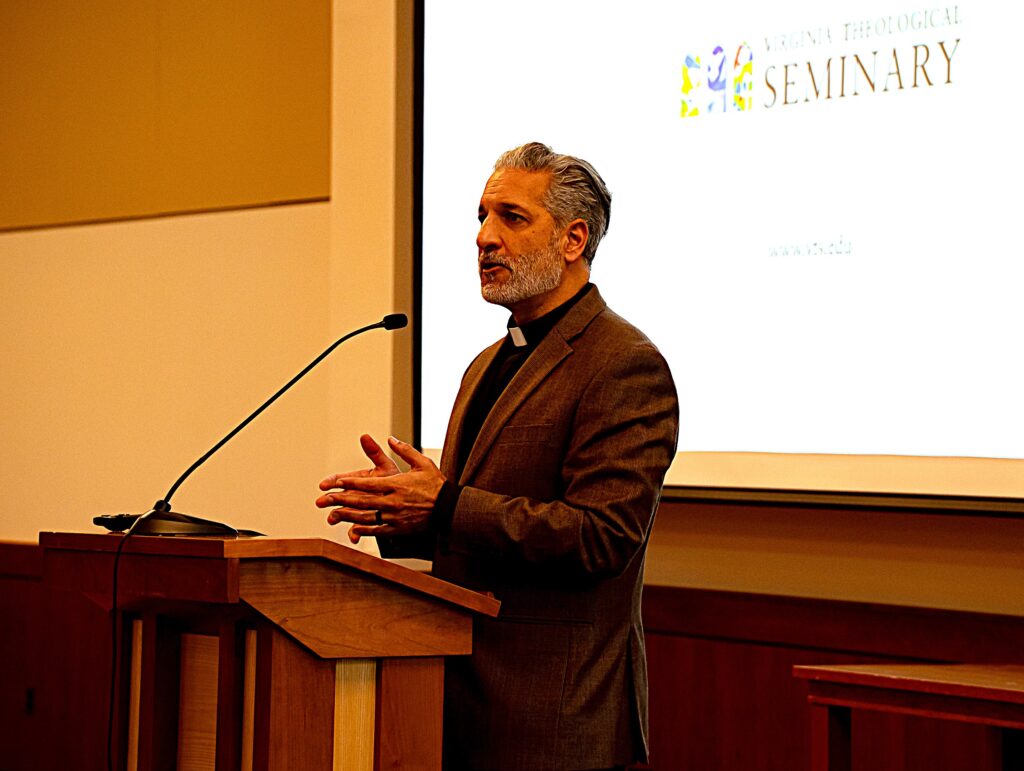
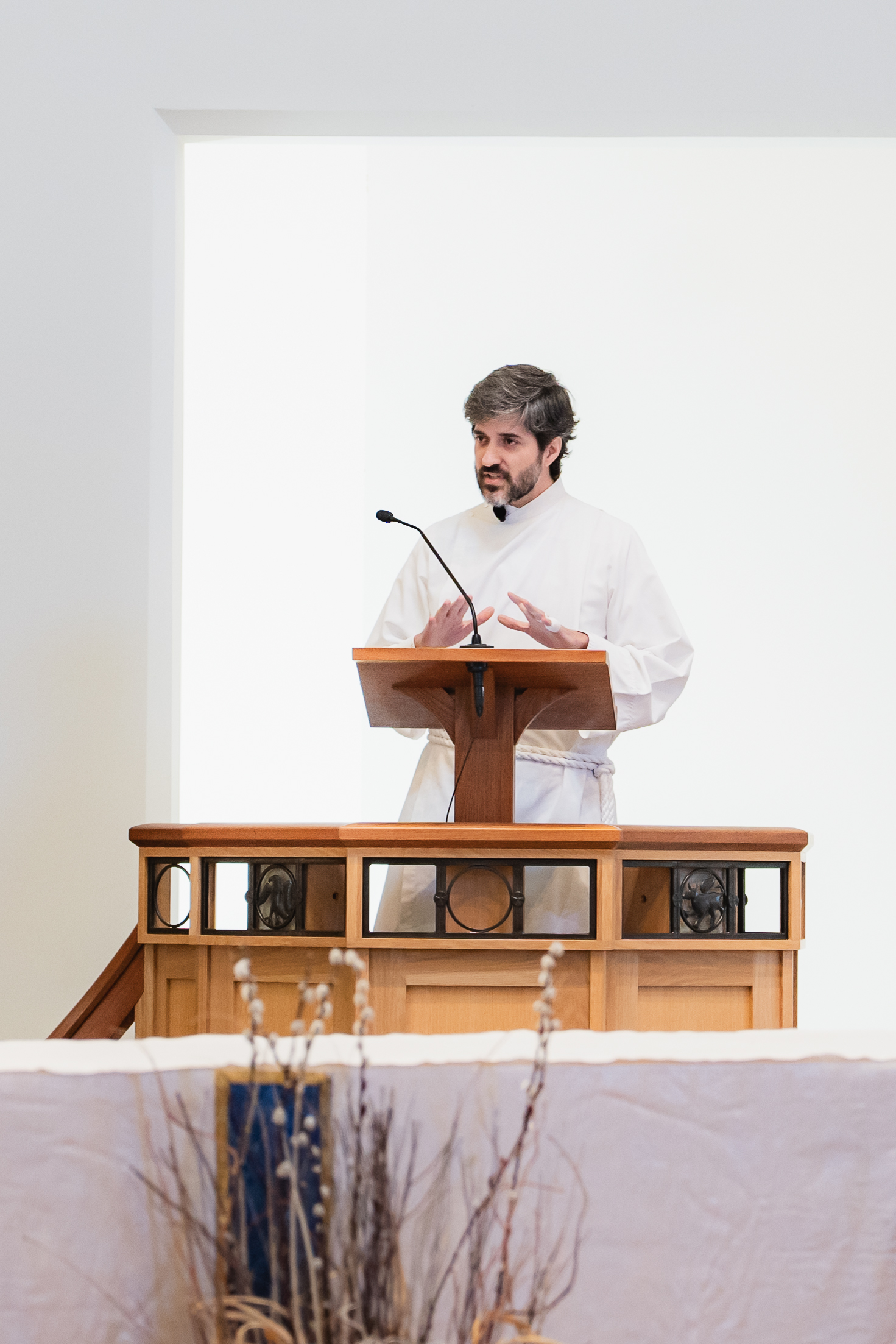
For the Rev. Dr. Lorenzo Lebrija, chief innovation officer of Virginia Theological Seminary and the executive director of TryTank Research Institute, fundraising is not simply a financial transaction, rather it is a spiritual act rooted in invitation, conversion, community, and prayer.
Drawing on the work of Henri Nouwen and his book The Spirituality of Fundraising, Lebrija invited people to reimagine their approach to fundraising and see it as an extension of ministry rather than a necessary administrative task.
“Henri Nouwen’s approach to fundraising deeply impacted me. He had me when he said, ‘Fundraising is precisely the opposite of begging.’ And that, to me, said, ooh, maybe I can do this.”
Lebrija explained that Nouwen emphasizes a commitment that integrates spirituality into every aspect of our lives, including how we ask for money. “Fundraising is proclaiming what we believe in such a way that we offer other people an opportunity to participate with us in our vision and our mission,” he said.
Seen this way, fundraising becomes less about requesting money and more about inviting people into God’s work, he said. But to do this effectively, fundraisers need to be clear and confident about their mission.
“We have to have a very clear vision for our ministry so that we can invite others into this mission. It’s about offering inspiration, not desperation. Think about entrepreneurs. They show confidence and clarity with their ideas. They thus build trust and excitement from that clarity. We need to be just as clear on God’s desires for our world and how we can help bring this about,” he said.
He gave the example of the Rev. Doyt Conn, a modern church fundraiser in Seattle, who was told by consultants that he would not be able to raise more than $4 million for a capital campaign. Instead, by building two simple questions – “Who gave you the church?” and “Who do you want to give the church to?” – into his case for support, he raised $9.2 million. “He was inviting people into that vision of God for Seattle,” Lebrija said. He explained that it was about participation, not transaction.
Quoting from Nouwen, Lebrija said: “Fundraising from the point of view of the Gospel says to people, ‘I will take your money and invest it in this vision only if it is good for your spiritual journey, only if it is good for your spiritual health.’ What a different approach that is, to not just seeing someone as dollar signs, but I am here to minister to you, and I do this by inviting you into this.”
He pointed out that Nouwen’s idea that fundraising is really a call to conversion, applied as much to fundraisers as it did to donors. “Those of us who ask for money need to look carefully at ourselves. We will never be able to ask for money if we do not know how we ourselves relate to money.”
Lebrija explained that Nouwen challenges fundraisers to examine their own relationship to wealth and security, confronting the discomfort and vulnerability that money often provokes. “Only when we are free from money can we freely ask others to give it,” he said.
Lebrija explained that relationships, not transactions, are at the heart of this vision. “Those who need money and those who can give money meet on the common ground of God’s love.” He added that when fundraising is done in this spirit, it builds deeper community within faith contexts and reflects trust in God’s abundance rather than a fear of scarcity.
Prayer is an essential part of this transformation. “Prayer is the spiritual discipline through which our mind and heart are converted from hostility or suspicion to hospitality toward people who have money,” Lebrija said. “Gratitude is the sign that this conversion is spreading into all aspects of our life.”
He added that generosity is not limited to financial contributions, but people can also give their time, talent and their networks. “‘How can we,’ says Nouwen, ‘embrace a vision of generosity that goes beyond finances, where people are invited to give of themselves in ways that extend their own skills and talents to God’s work?’” He added that for Generation Z, this was one of the most important ways to show them that the church is authentic in its call to do the work.
Together, the symposium’s speakers showed that while philanthropy is an evolving field, it remains a deeply human practice that requires a strong understanding of impact, a thoughtful use of technology, and a grounding in spiritual purpose.