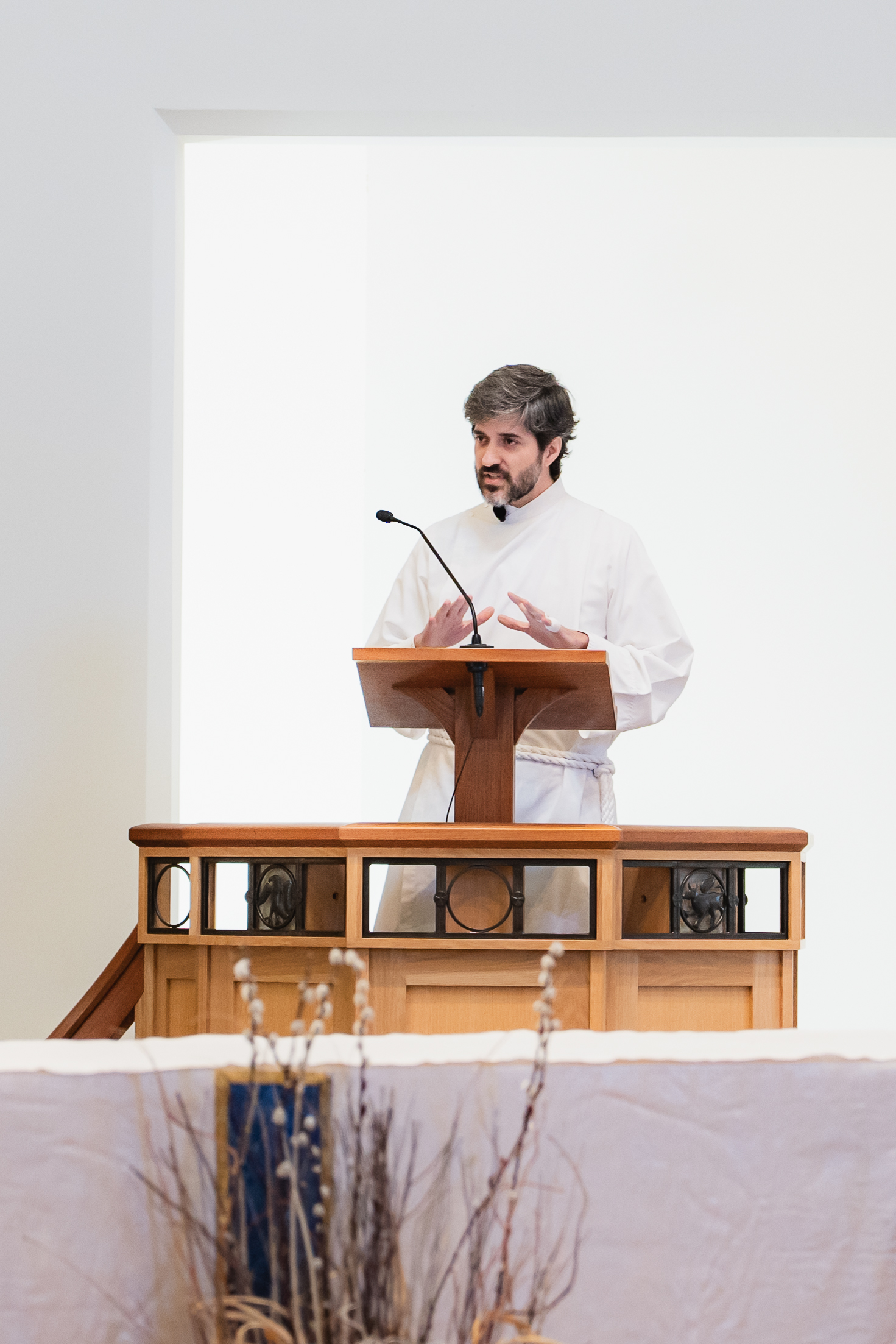
When Saint Michael and All Angels Episcopal Church in Dallas began planning for a major capital project to remake its campus, its Rector, the Rev. Dr. Christopher D. Girata ’08, was clear about one thing: the church must lead by example and model generous giving.
Before launching the major capital campaign, the church took stock of its assets and thought creatively about what it could do with them to benefit the community. “I wanted the institution to model generous giving so that when we went to individuals, we could ask them to do the same,” Girata explains.
His approach led to an innovative impact model under which Saint Michael leased land it owned to a developer and committed to give most of the income away through strategic community grants.
Girata credits this act of generosity by the church for the success of its capital campaign, which went on to raise more than $76 million. The total not only makes it the largest capital campaign ever undertaken by an Episcopal Parish, but it was also more than double the $35 million that campaign consultants had estimated was the maximum amount it would be able to raise.
In the 1990s, Saint Michael acquired an undeveloped piece of property with the plan to expand the church building on it. But Girata says the idea never really got off the ground, largely because the spirit of the congregation was not one of “build more buildings for ourselves.”
When Girata arrived in 2016, the land had still not been developed. Saint Michael had been in a slow decline, mirroring the declining membership of The Episcopal Church at large. There was a concern that Saint Michael would continue to see a decline in annual giving. As a result, the church was considering leasing the land instead of building on it, with the intent to use the income for its operating budget.
“I didn’t want [the income from the ground lease] to come into the operating budget because I think churches that have significant funding outside of annual giving risk becoming lazy. We had a valuable asset, and I wanted to capitalize the asset, but I wanted to give the proceeds away,” Girata explains.
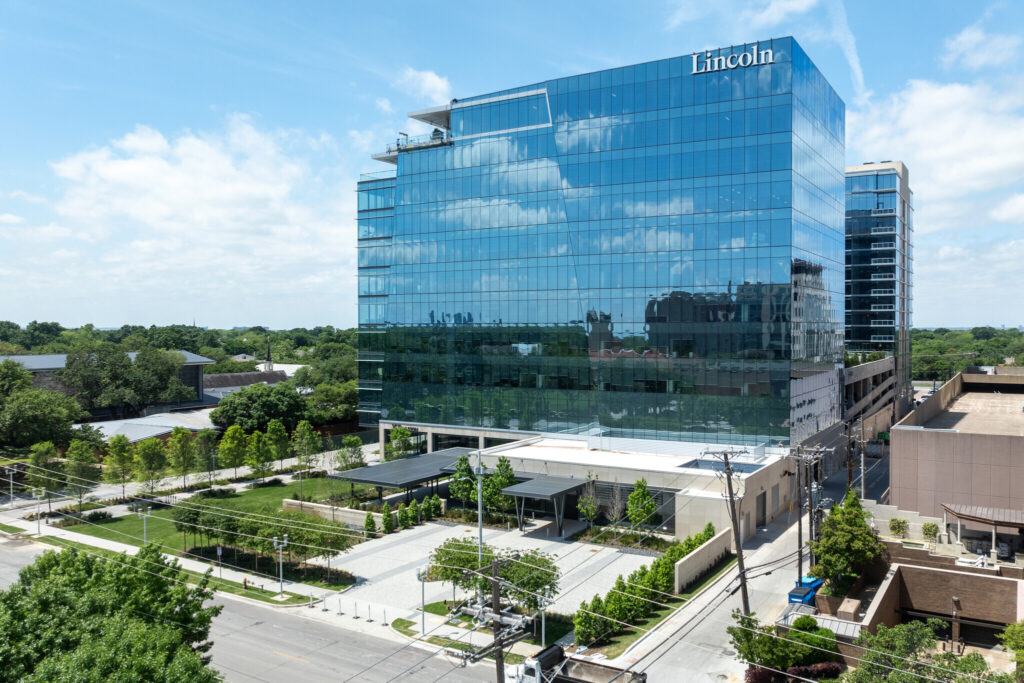
The church signed a 99-year ground lease with Lincoln Property Group to develop the land into a multi-use space, including an office tower, restaurant, parking, residential tower and 1.3 acres of green space. Around 85% of the annual income from the ground lease goes into the Horizon Fund, a special fund, which is directed by two committees of parish leaders and managed by the church’s All Angels Foundation. “The church cannot use any portion of the income in the Horizon Fund for annual operations. That is legally binding. It would take a super majority of both vestry members and foundation trustees to change it. We made it as hard as possible to undo,” Girata says.
The fund, which had a balance of $7.5 million in September 2025, has been making distributions since 2021. The outreach portion of the fund employs a venture philanthropy model and has distributed substantial grants to several nonprofits in North Texas. It is projected to have gifted more than $1 million to local community organizations by the end of 2028.
As income from the ground lease continues to come in, Girata estimates that within 20 years, the Horizon Fund will be one of the largest faith-based foundations in Texas. “It’s growing quickly and its impact has been completely transformative in inspiring church members to do more themselves to impact the community,” he says.
With the first income from the ground lease allocated, Saint Michael leaders felt empowered to start fundraising for the church’s capital campaign to improve its own campus. “A wonderful team of parish leaders were formed to help guide the campaign, refine the hopeful story, and advocate for the vision,” Girata says.
He explains that the church building, which dates back to the 1950s, had been added to bit by bit over the decades and did not function well. “It was a mess of lots of long skinny hallways, with tight corner turns, making it very hard to move a large volume of people around. We also had at least 14 different ways to enter the main building, which made it impossible to curate a good visitor experience. Our goal wasn’t to make the building bigger, although technically we will have more square footage, we really wanted to make the building smarter. We wanted to create supportive and inviting community space.”
The construction project focused on upgrading the building’s infrastructure for long-term sustainability, expanding community spaces to encourage gathering and deeper fellowship, and investing in educational spaces, including renovating Saint Michael Episcopal School and the church’s Educational Wing, which provides space for children, youth and adult education programs.
Saint Michael had not done a major capital campaign since building the education wing in the 1970s. “A major capital raise was a big culture shift and we knew we had to have a compelling story in order to make that shift. That’s where that first phase of giving away the land income was key. I had over 2,500 meetings over the course of this campaign, and as I told the story of giving away the lease income, person after person felt inspired. When they realized the church had been very generous in giving away this asset to the community, they felt compelled to make a gift beyond what they had planned to give because they wanted to follow the lead of the church itself,” Girata says.
Consultants who had advised Saint Michael on the campaign suggested the maximum amount it would be able to raise was $35 million. Girata always felt they could raise more, so he set the initial target at $50 million, even though he knew this goal would be a stretch. “It was seven times our annual budget. Usually, raising five times your annual budget is a strong goal, so intending to raise seven times is pushing it. We ended up raising more than 10 times our annual budget.”
The $50 million target was originally set before Covid. But after the pandemic, construction costs increased significantly, so even after scaling back the building plans, the campaign goal was increased, first to $60 million then to a stretch target of $65 million. Meanwhile, the interest rate Saint Michael would have to pay on a bridge loan to fund construction while gifts came in rose sharply from 2% to 8%. “A bridge loan that would have cost us around $500,000 in interest expense was suddenly going to cost us more than $4 million. So, we told the story. We went to all our givers and explained that we were taking pledges over five years, but our construction was over two years, so we needed to have a bridge loan against the pledges.” Girata explained that if they were able to give earlier or give more, their gift would actually have more of an impact than just the dollars itself because it would help Saint Michael borrow less, which then lowered total expense of the project.
The story was very well received because most of the parishioners did not want the church spending money on interest expenses, Girata remembers. More than 85% of the people who had already given, agreed to either give faster or give more. As a result, the cost of the bridge loan has dropped from more than $4 million to under $500,000.
“People were giving more because they saw how well-run the whole program was. Many of our parishioners are businesspeople, and because we were monitoring things so closely and communicating things so clearly, a lot of people started giving more because they realized that their gifts were going to be used well,” Girata says.
For churches that would like to do something similar to Saint Michael, Girata advises them to be creative about what gifts and assets they have, and how these assets can be used. “Every church community has a particular set of gifts. Sometimes it’s land, sometimes it’s identity, sometimes it’s mission, sometimes it’s social capital. Everybody has assets that can be capitalized for mission. Every church can give more generously of something. If a community can identify what they have and boldly take the leap of faith to give most of it away, they can turn around to their members and say, ‘Look at what we’ve done institutionally, now we want you to do the same individually.’”